Matt Hikida and Yonsei Fields: A Maine-Japan Story Through Farming and Fermentation
In Midcoast Maine, a quarter-acre of leased land is becoming something more than a small plot of vegetables. It is the starting point of Yonsei Fields, a farm-and-fermentation project led by Matt Hikida, a Bowdoin graduate from the Class of 2022 who has rooted his life in Maine through organic farming and Japanese food traditions.
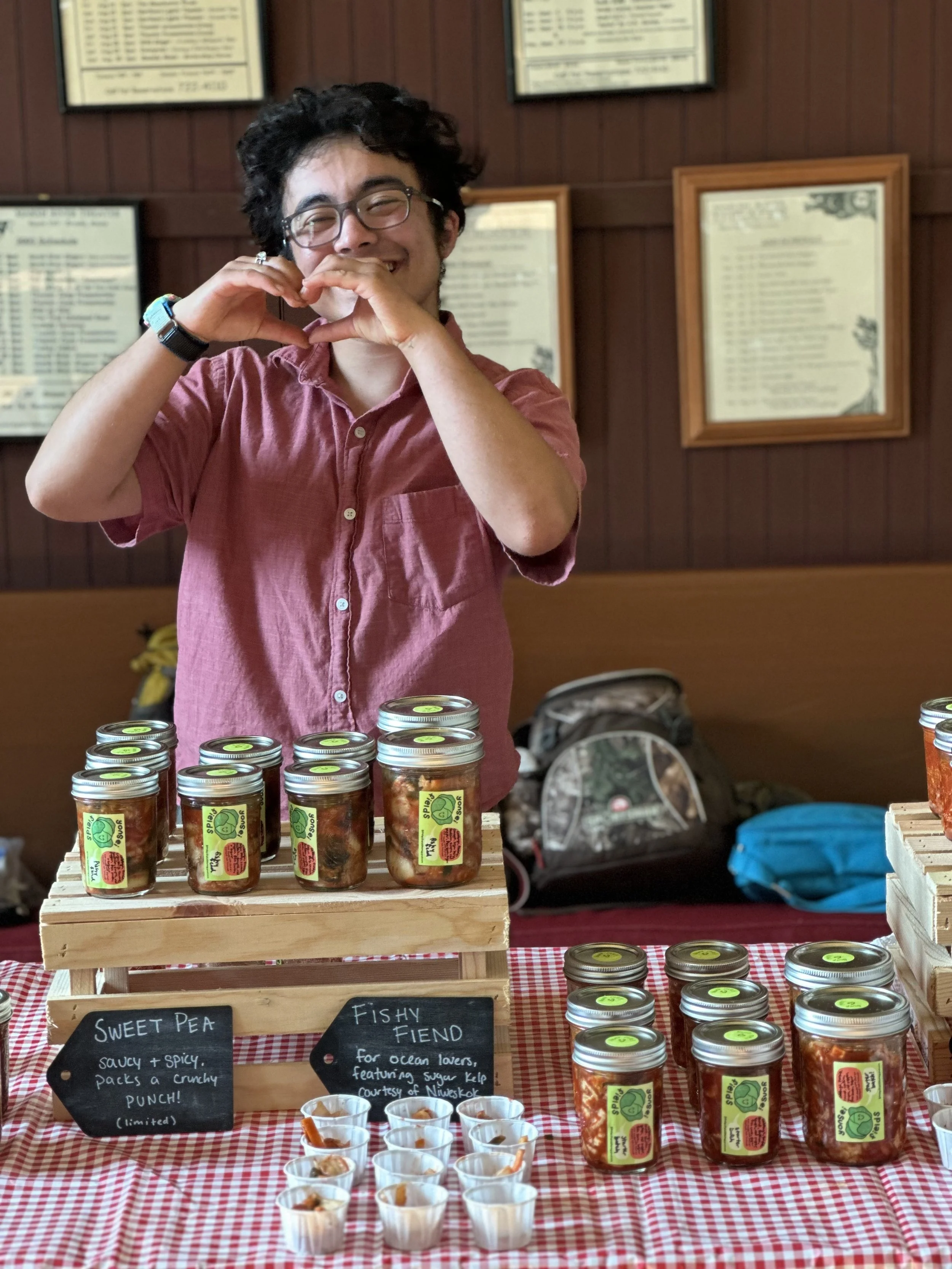
Matt at a June market in Brooks, ME.
Matt grew up in Manhattan, New York, but his path has long leaned toward the outdoors. He spent time visiting grandparents in a rural area, had formative experiences canoeing, and attended a semester school in Vermont before coming to Bowdoin. At Bowdoin, Maine’s landscape, ocean, mountains, rivers, and long winters became part of what he wanted in everyday life. He describes loving the rhythm of the seasons, and especially the presence of snow.
After graduation, Matt stayed in the Midcoast and built his experience through hands-on work across several farms. He worked first on an educational farm in Rockport (Knox County), then on organic vegetable and flower farms in Waldo County. Matt is now in his third year on an organic mixed vegetable farm and is also stepping into a farm manager role at a small flower farm in Monroe. Alongside his farm work, he began leasing about a quarter acre of land to grow produce for value-added Asian ferments, starting with miso.
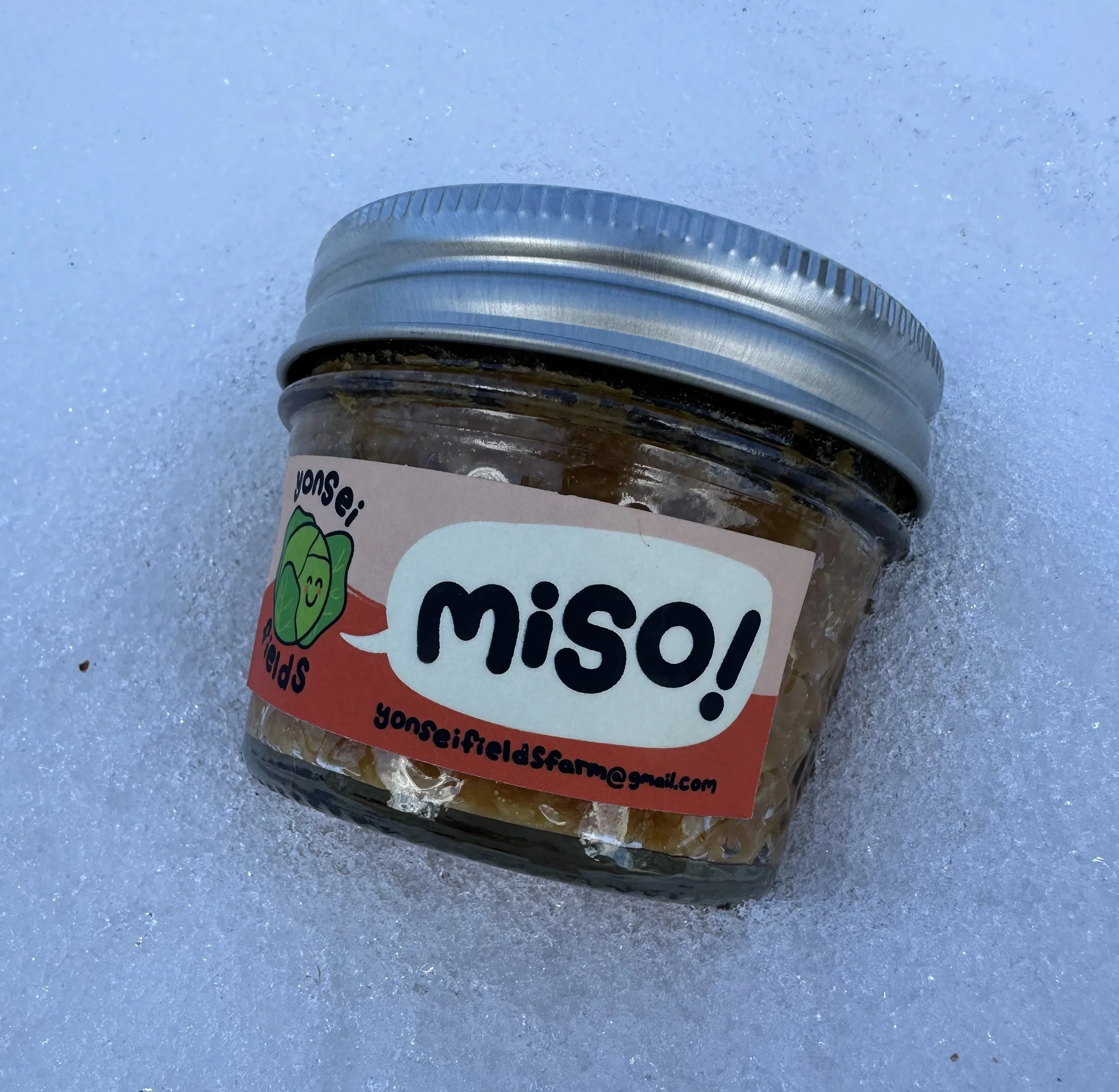
A jar of miso in the snow, made with Yonsei Fields soybeans and local koji.
A Family History Interwoven with Agriculture
Matt’s Maine-Japan connection is also grounded in family history. His dad’s family is Japanese Canadian and had been living in British Columbia before World War II. During the war, they were forcibly relocated to Alberta, where they did forced labor on sugar beet farms.
Agriculture continued to shape the family across generations. Matt shared that his grandfather later grew tomatoes for Campbell’s soup, and that farming remained part of the family’s movement and work in North America.
Thus, the name Yonsei Fields carries a specific meaning: yonsei refers to “fourth generation” in Japanese. For Matt, the name reflects not only lineage and continuity but also a practical observation: many crops grown in northern Japan grow well in Maine. That overlap among climate, growing conditions, and food traditions became the foundation of his project.
Fermentation as Craft, Science, and Everyday Food
Matt initially began the project to make miso, but miso requires long fermentation, which he joked is “not the best form of cash flow.” Over time, he expanded into other products, including kimchi. Matt grew up eating kimchi and being drawn to fermentation, not only for flavor, but for the science behind it. Surprisingly, many of the core ingredients grow well in Maine: cabbage, root vegetables, garlic, scallions, and even ginger.
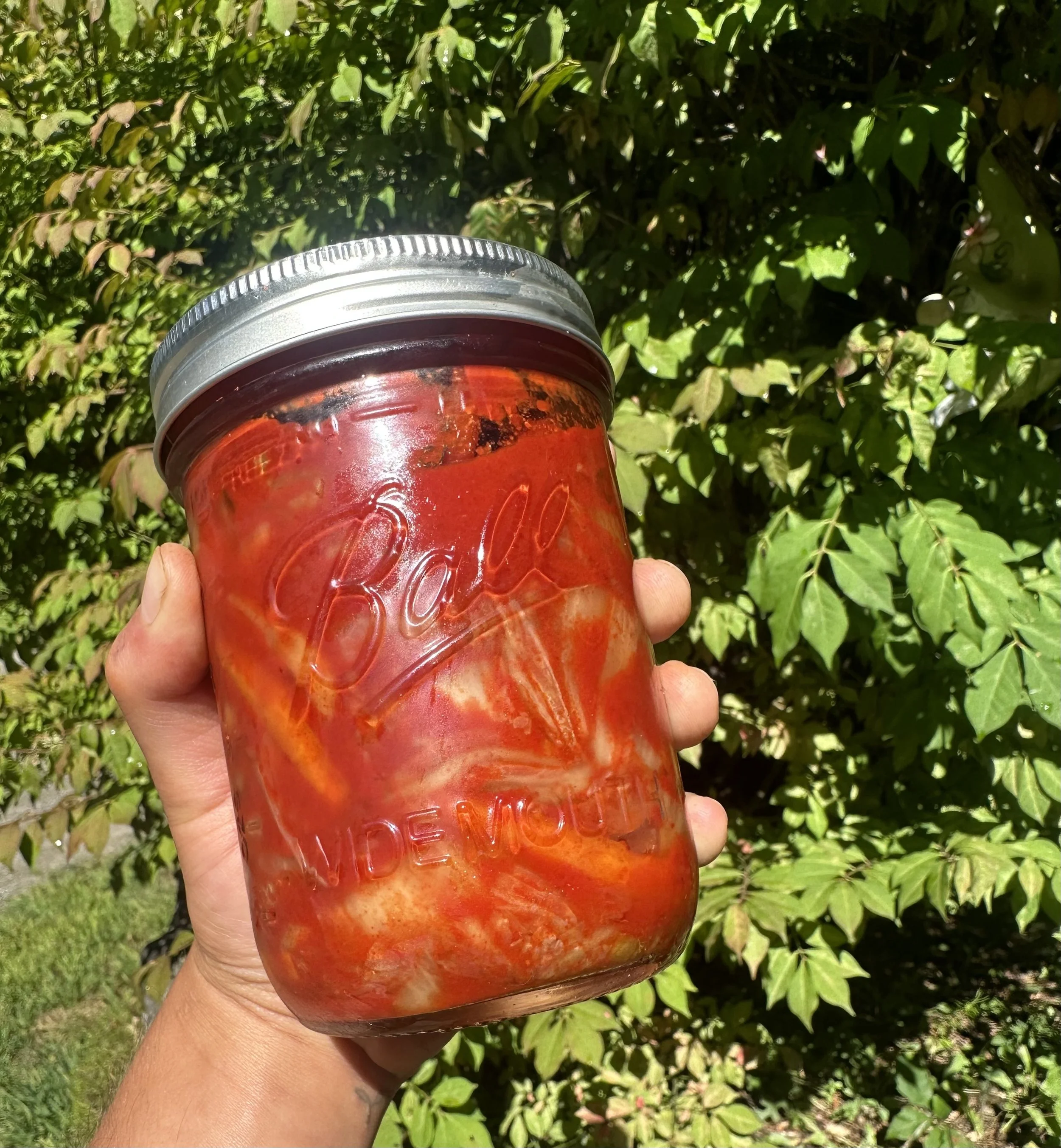
A jar of the "OG Kimchi," made with homemade gochujang and vegetables grown at Yonsei Fields and Calyx Farm.
Beyond growing, Matt is also thinking about how people encounter unfamiliar foods. He explained that some vegetables and ingredients can be difficult to “translate” into daily cooking for customers who don’t have access to Asian grocery stores or don’t already know the recipes. That was one reason he leaned into finished products, because something ready-to-eat can make the cultural connection more immediate.
Even with ferments, some items still require explanation. Matt said he has had a harder time marketing lesser-known pickles, such as namasu-style pickled carrots and daikon, because many customers simply aren’t sure what they are looking at or how they fit into a meal. He has continued experimenting, learning what resonates, and building knowledge through community.
Finding Community in Rural Maine
Matt’s ability to build Yonsei Fields is closely connected to the community he has found in Midcoast Maine. As a queer transgender man, one unexpected and pleasant surprise of farming in Waldo County is the presence of many queer and trans farmers in the region.
Working alongside other queer farmers shaped his learning environment, especially in a field where many people grow up with access to tools, workshops, and informal training that others may not have. He also described that this network has been directly helpful: land opportunities, supplies, shared knowledge, and pathways into programs like MOFGA’s Journeyperson program.
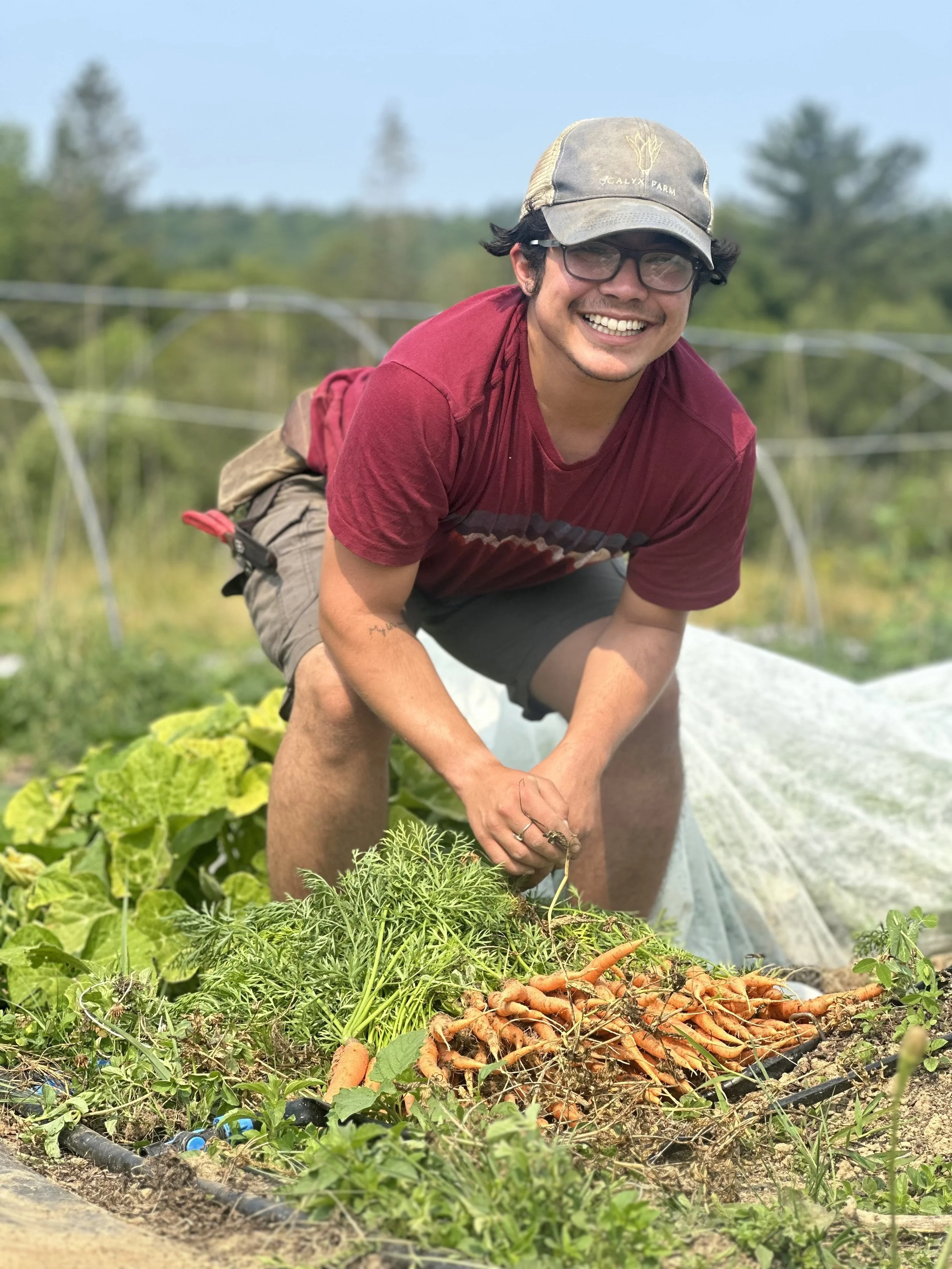
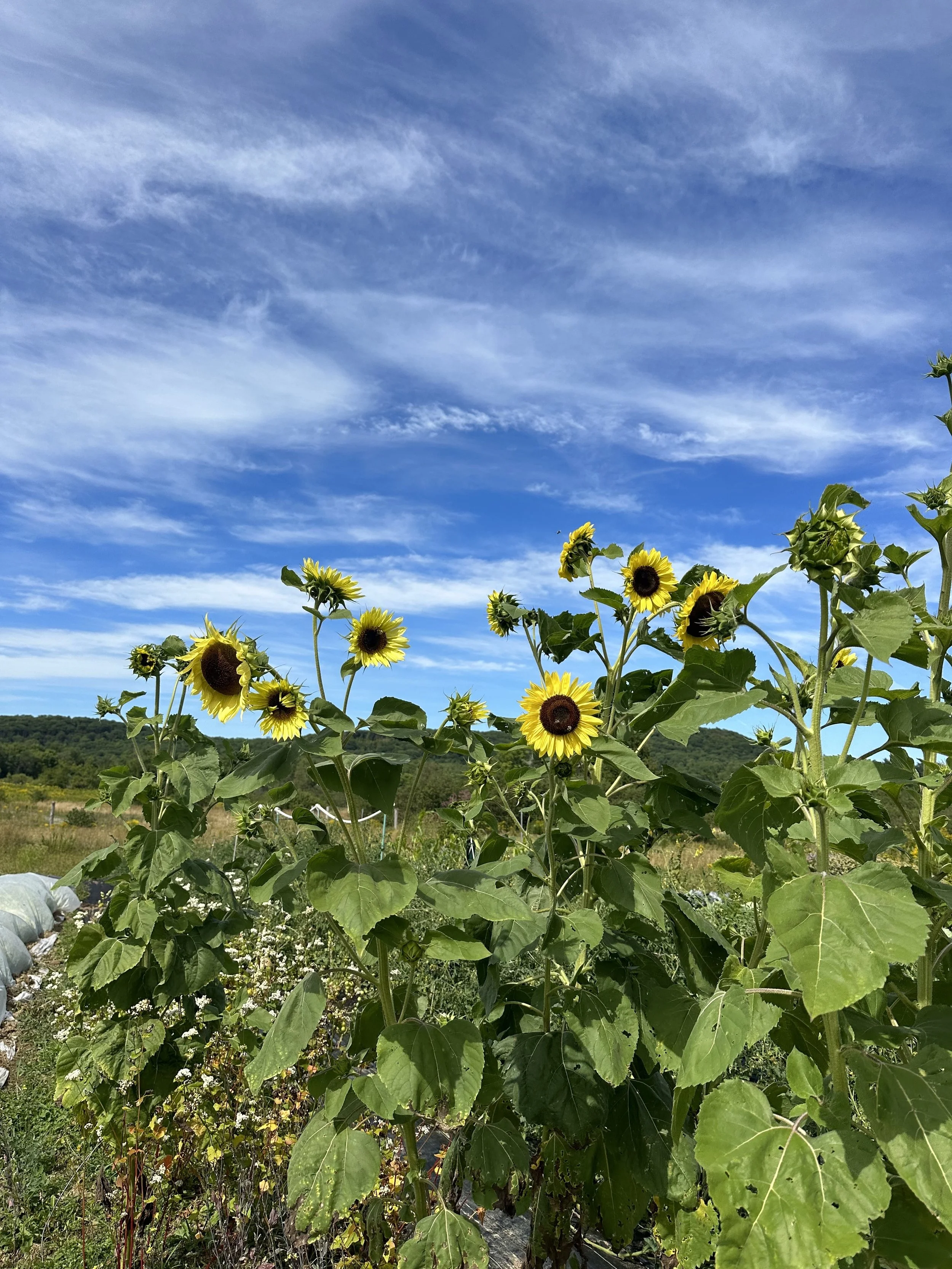
For him, Yonsei Fields is not only a farming project, but it is also a project made possible through relationships. Yonsei Fields is still growing, season by season, batch by batch, a testimonial that shows how Maine-Japan connections can take shape through everyday work on the soil, food preservation, and the slow craft of fermentation, rooted in both family history and present community.
🌊 Subscribe to our Monthly Newsletter for more Maine-Japan stories that celebrate culture, community, and creativity across the sea!
📩 Want to share your story? Email us: jcaofmaine@gmail.com.
📷 Follow us on Instagram: https://www.instagram.com/maine_japan/